
Lost Places in the Black Forest
Abandoned grand hotels, former sanatoriums and forgotten industrial sites: throughout the Black Forest, numerous places still bear witness to earlier times. We present well-known lost places in the region, explain their current status and show which sites can be visited legally.
Content reviewed:
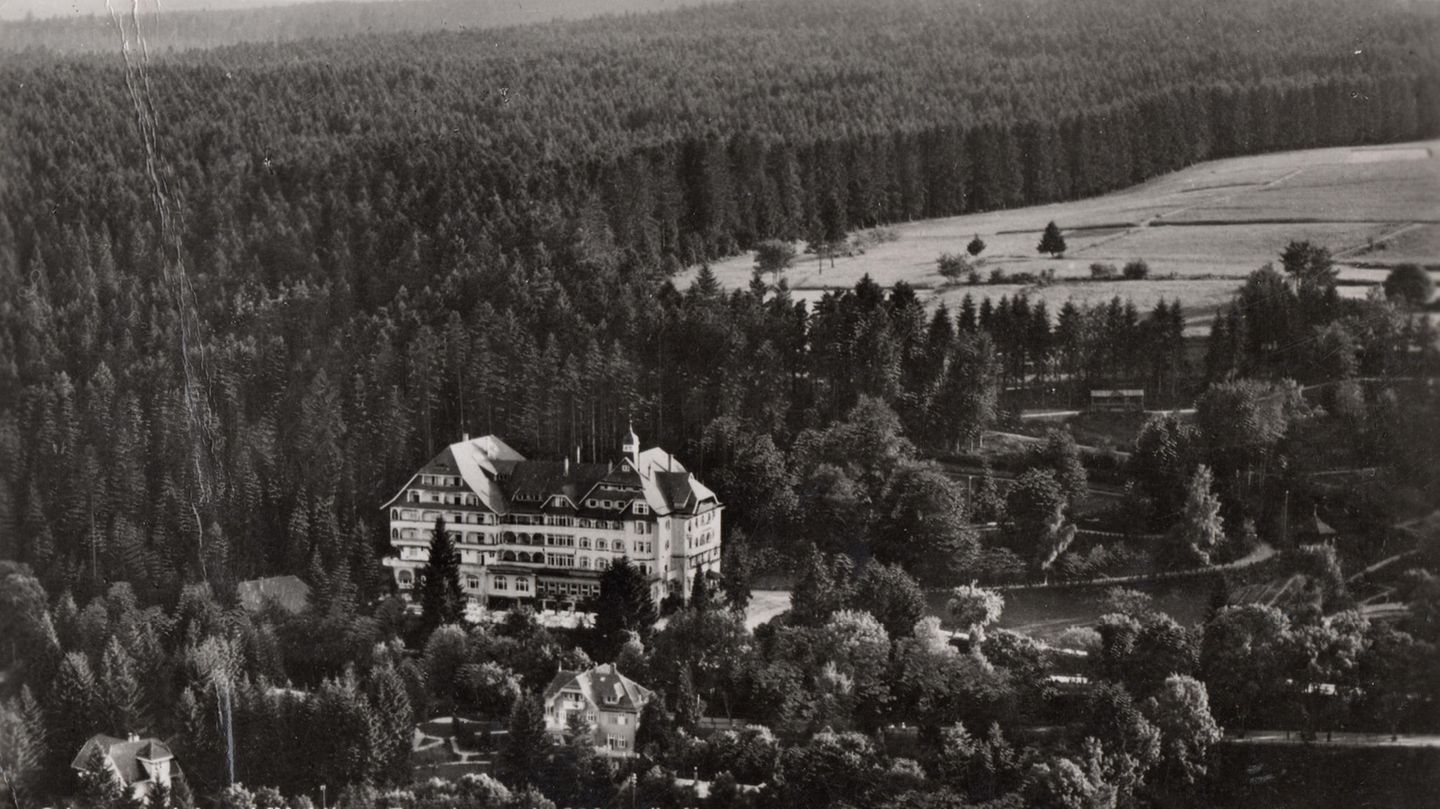
What makes lost places in the Black Forest so fascinating?
Between densely wooded mountain slopes, traditional spa towns and the Black Forest High Road stand buildings whose original purpose has long since disappeared. Some continue to decay; others are secured, redeveloped or gradually brought back to life.
Their special atmosphere comes from the contrast between former splendour and visible change. At the same time, these places tell a great deal about the history of tourism, healthcare and industry in the Black Forest.
The best-known lost places in the Black Forest
From a former grand hotel and an abandoned sanatorium to an industrial site: these places are at the heart of our Black Forest guide.
Hotel Waldlust in Freudenstadt
The former Grand Hotel Waldlust is one of the best-known lost places in the Black Forest and is gradually being revived as a cultural and event venue.
Opened in 1902, the luxury hotel attracted international guests in its heyday. Its grand ballroom, long corridors, historic rooms and many preserved interior details still provide an impression of the hotel culture of that era.
After several changes of ownership and lengthy periods of vacancy, regular hotel operations eventually ceased. Waldlust later became one of the most famous photographic subjects in Germany’s lost-place scene.
Numerous ghost stories also grew up around the building. One of the best known tells of a hotel owner who was allegedly murdered. However, this story belongs to the modern legends surrounding Waldlust and is not historically documented.
Today, the Denkmalfreunde Waldlust association works to preserve the building. Guided tours, visitor days, photo tours, concerts and events provide legal access to parts of the former grand hotel.
The former Charlottenhöhe sanatorium near Schömberg
Charlottenhöhe is an important site in the region’s medical history, but today it is an acutely dangerous fire-damaged ruin that is not accessible.
Between 1907 and 1973, the former pulmonary sanatorium treated people suffering from tuberculosis and other lung diseases. Its elevated location, fresh air and spacious open-air resting halls were part of the therapeutic concept of the time.
After the sanatorium closed, various plans were developed for a new use. However, no lasting revival of the extensive building complex was achieved. Vacancy, vandalism and progressive decay came to define the site.
A major fire in 2023 destroyed large parts of the roof and significantly increased the danger. The site was cordoned off. Unstable structural elements, open shafts and damaged floors make entering the building life-threatening.
The Weißenstein paper mill near Pforzheim
The former paper mill in Dillweißenstein is an impressive reminder of industrial history on the northern edge of the Black Forest.
The Weißenstein paper mill was founded in 1861. Hydropower from the Nagold river played an important role in production. Over the decades, an extensive complex of production halls, warehouses, workshops and technical installations developed.
Paper production ended in October 2001. Since then, large parts of the former factory site have stood empty. Individual sections are nevertheless used, secured or being examined with regard to future development.
The site is therefore neither a public attraction nor a freely accessible ruin. Damaged structures, roofs and floors can pose serious risks even in halls that appear stable.
Schlosshotel Bühlerhöhe
The monumental Schlosshotel Bühlerhöhe is one of the best-known vacant luxury hotels in the Northern Black Forest.
The striking complex was built from 1912 onwards high above the Bühl valley. It was originally intended as a convalescent home for officers. It later served as a spa house and eventually as an exclusive castle hotel.
Between 1988 and 2010, Bühlerhöhe was one of the region’s best-known luxury hotels. International guests, high-ranking politicians and prominent visitors shaped the image of the house.
Since its closure in 2010, there has been no regular hotel operation. Despite its long vacancy, however, it is not an unsecured ruin: the listed building is guarded, maintained and stands on private property.
That distinction is precisely what makes Bühlerhöhe interesting. It is a vacant grand hotel with a lost-place atmosphere, but expressly not a freely accessible destination for exploration.
Lost places along the Black Forest High Road
Between Freudenstadt and Baden-Baden, several former hotels and inns recall the great era of mountain, spa and winter tourism. Waldhorn, Kurhaus Sand, Hundseck and Alexanderschanze are now at very different stages of their development.
The former Waldhorn near Kniebis
The former Waldhorn at the entrance to Kniebis is representative of the decline of individual tourism businesses along the Black Forest High Road.
The building stands on a prominent bend close to Kniebis. For many years, Waldhorn was a stopping point for travellers, hikers and winter-sports visitors. The business included dining rooms and overnight accommodation.
As travel habits changed, several traditional mountain hotels and excursion inns lost their former importance. The vacancy of Waldhorn became a visible symbol of this development.
The building can be seen from public roads, but it is not a regular visitor attraction. The property must not be entered without permission.
Kurhaus Sand on the Black Forest High Road
Numerous traces of the former hotel and excursion culture have survived inside Kurhaus Sand to this day.
What began as a simple shelter gradually developed into a well-known mountain hotel. Kurhaus Sand was a popular starting point for excursions, hiking and winter sports along the Black Forest High Road.
Regular hotel operations ceased in the 1990s. Parts of the furnishings, furniture, guest rooms and communal areas remained inside, giving the building an unusually immediate sense of its former use.
Unlike many completely closed lost places, Kurhaus Sand has at times been opened for registered visits and official events. However, such opportunities are not permanently available and must be confirmed before travelling.
The former Kurhaus Hundseck
The severely dilapidated Hundseck ruin is one of the best-known, but also one of the most dangerous former hotels along the Black Forest High Road.
Hundseck was once one of the major spa and mountain hotels in the region. In its heyday, the extensive building complex had numerous guest rooms as well as leisure and recreation facilities.
After it closed, the condition deteriorated over decades. Parts of the building have already had to be removed for safety reasons. The remaining structure is considered at acute risk of collapse.
In February 2026, the state, district and participating municipalities agreed on a joint approach to demolition. Because of species-protection requirements, published plans indicate that demolition can begin no earlier than September 2026.
Even after demolition, Hundseck will remain relevant to the history of the Black Forest High Road. The site will then document not only a lost place, but also the final disappearance of a once important spa hotel.
Alexanderschanze – a lost place in transition
The former Hotel Alexanderschanze is changing from a long-vacant property into a new location for the Black Forest National Park.
The former hotel stands on a prominent mountain pass near Kniebis. For many years, it was a well-known stopping point along the Black Forest High Road. Hotel operations ended in early 2015.
The state of Baden-Württemberg acquired the listed building. After a lengthy planning phase, concrete clearance, dismantling and redevelopment work began in 2026.
Plans include a ranger station for the Black Forest National Park, an information area, an event room and simple overnight accommodation for hikers.
Strictly speaking, Alexanderschanze is therefore no longer a classic lost place. It remains in this guide because its transformation shows how an abandoned building can gain a new perspective.
How famous mountain hotels became abandoned places
The history of Waldhorn, Bühlerhöhe, Sand, Hundseck and Alexanderschanze is closely linked to changes in tourism along the Black Forest High Road. The following documentary explores this development and complements the places presented above with historic footage and further background information.
Additional video documentaryLost places along the Black Forest High RoadShow video
You are currently viewing a placeholder content from YouTube. To access the actual content, click the button below. Please note that doing so will share data with third-party providers.
More InformationThe video adds historical background. The present condition of individual buildings may have changed since it was produced.
Open directly on YouTubeHistoric ruins with a lost-place atmosphere
If you would like to experience old walls and overgrown ruins without entering private property or dangerous buildings, Allerheiligen offers a site that is officially open to visitors.
Allerheiligen Abbey ruins near Oppenau
Allerheiligen is not a classic lost place, but it offers an impressive and legally accessible landscape of ruins in the Northern Black Forest.
The history of the former Premonstratensian monastery dates back to the late 12th century. For many centuries, Allerheiligen served as a monastery, school and place of pilgrimage.
Fires, political changes and the dissolution of the complex eventually ended its former use. Today, parts of the monastery church, cloister and other walls still survive.
The ruins lie in a wooded gorge and can easily be combined with a walk to the nearby Allerheiligen Waterfalls. Visitors should stay on the designated paths and must not climb on the protected masonry.
More abandoned places in the surrounding region
The following two destinations were already part of the previous article. Geographically, they are not in the Black Forest, but in the Kraichgau region and neighbouring Alsace.
Menzingen moated castle
The Renaissance castle, built in the 16th century, was heavily damaged during the final weeks of the Second World War. The ruins then remained surrounded by vegetation for decades.
Parts of the complex have since been cleared and secured. The moated castle is privately owned and may generally not be entered. However, sections of the ruin can be seen from public areas.
Barracks site near Neuf-Brisach
The extensive site near Volgelsheim was built at the beginning of the 20th century. Over the course of its history, both German and French military units were stationed there.
After military use ended, numerous buildings stood empty. Several sections have since been renovated or put to new uses. The site should therefore no longer be regarded as one single lost place.
Which places can sensibly be combined?
The lost places are not located right next to one another. For a relaxed excursion, it therefore makes sense to group destinations by region and check access rules before setting off.
Waldlust, Waldhorn and Alexanderschanze
These places can be combined thematically on a route via Freudenstadt, Kniebis and the Black Forest High Road. An interior visit is only possible at Waldlust on official dates.
Sand, Hundseck and Bühlerhöhe
The former hotel sites lie along or close to the B 500. Sand may only be entered with a confirmed appointment; Hundseck and Bühlerhöhe are not freely accessible destinations.
Charlottenhöhe and the paper mill
Both places are comparatively close to Bad Wildbad, but neither may be entered. They are therefore not suitable for regular interior visits.
After your tour, a deliberate contrast awaits in Bad Wildbad: warm thermal water, historic bathing culture and relaxation in the “Palais Thermal”.
Discover Mokni’s Palais Hotel & SPALost places are constantly changing
Some abandoned buildings continue to decay, others are demolished or given a new use. Waldlust is developing into a cultural venue, Alexanderschanze is being redeveloped and Hundseck may be close to disappearing for good.
That is precisely why lost places should not be seen merely as photo backdrops. Behind their walls are real stories, property rights and often cultural heritage worth protecting.
Questions about lost places in the Black Forest
Important information about legal visits, private property and current changes.
Which lost places in the Black Forest can be visited legally?
Hotel Waldlust can be visited during official guided tours, visitor days and events. At Kurhaus Sand, occasional visits may be possible by prior arrangement. The Allerheiligen Abbey ruins are a historic attraction that is regularly open to visitors.
Can you simply enter abandoned buildings?
No. Many lost places are on private property. Entering without permission can have legal consequences. There are also hazards such as damaged floors, ceilings at risk of collapse, open shafts, broken glass and possible pollutants.
Which lost place is near Bad Wildbad?
The former Charlottenhöhe sanatorium near Schömberg is one of the better-known sites relatively close by. However, the building is a dangerous fire-damaged ruin and must not be entered. The Weißenstein paper mill near Pforzheim is also comparatively close, but it is on private property.
Is Bühlerhöhe a freely accessible lost place?
No. Although Schlosshotel Bühlerhöhe has had no regular hotel operation since 2010, it stands on secured private property and is maintained. Free access is not permitted.
Can Kurhaus Sand be visited?
Individual registered visits and events have been offered at Kurhaus Sand in the past and also in 2026. A visit is only permitted with current, explicit confirmation. Spontaneous exploration is not allowed.
Will Kurhaus Hundseck be demolished?
In 2026, the state, district and participating municipalities agreed on a joint approach to demolition. Because of species-protection requirements, published plans indicate that demolition can begin no earlier than September 2026.
Is Alexanderschanze still a lost place?
Only to a limited extent. After several years of vacancy, redevelopment work began in 2026. The former hotel is intended to accommodate, among other things, a National Park ranger station and simple accommodation for hikers.
What should visitors keep in mind?
Only visit officially accessible places, stay on designated paths and do not take anything with you. Do not damage buildings, leave litter or publish unauthorised access points to private property.